So you’ve decided to invest in a Pilates reformer — great decision. But now comes the part that trips up almost everyone: do you go with an aluminum reformer with a tower bundle or stick with a classic wooden reformer bundle? It sounds simple until you’re staring at two very different price tags, two very different aesthetics, and a dozen conflicting opinions on Facebook groups.
I’ve been in the Pilates equipment space long enough to know that this isn’t a one-size-fits-all answer. The right choice depends on how you move, how much you care about long-term maintenance, and yes — how your studio looks on Instagram. Let’s break it all down, honestly and without the sales pitch.
1. Material Durability: Aluminum vs Wood — Who Wins?
Let’s start with the big one. When you’re spending serious money on a reformer bundle, you want it to last. And material is everything.
Aluminum Reformers
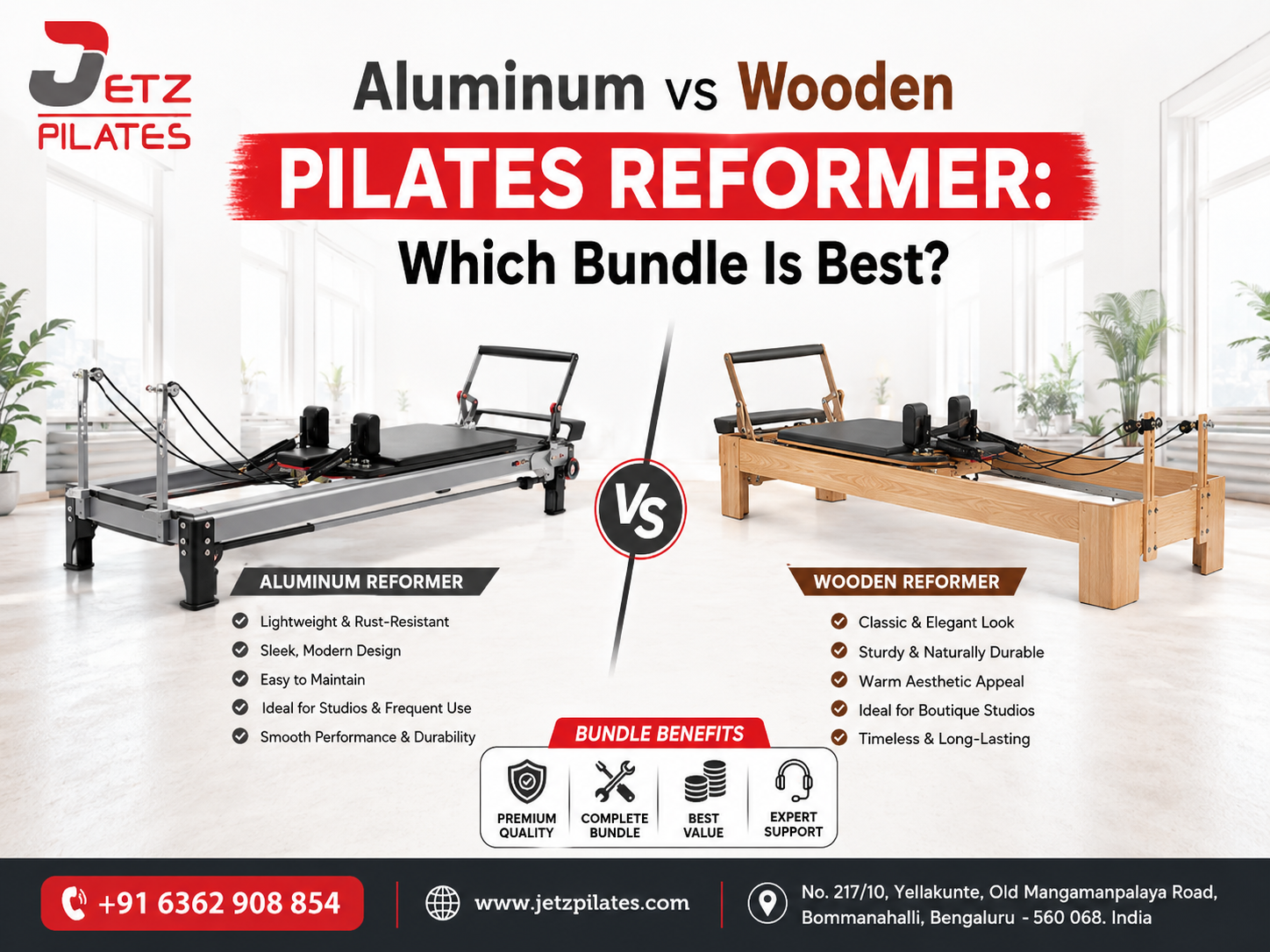
Aluminum is a beast when it comes to structural integrity. It doesn’t warp, crack, or swell with humidity — which is a big deal if you’re running a hot studio or live somewhere with real weather. The Luxury Aluminum Reformer With Tower Bundle, for instance, is engineered for professional-grade daily use. The anodized finish resists corrosion, and the rail system stays true over time with minimal drift.
The Jet Black Reformer With Tower Bundle takes this a step further with a powder-coated matte finish that not only looks incredible but adds a micro-layer of protection against daily wear. In a busy studio environment, that matters.
Wooden Reformers
Wood is the original reformer material, and it’s still beloved for good reason. A well-crafted wooden reformer bundle — using solid maple or beech — can last decades. The warmth and natural feel underfoot is something aluminum simply can’t replicate. That said, wood is more sensitive to moisture, temperature changes, and heavy daily use. Over time, joints can loosen and surfaces can show wear more visibly. Great for home use, slightly more demanding in commercial environments.
Verdict: For pure long-term structural performance in a professional setting, aluminum edges ahead. For home studios and hobbyists who prefer natural materials, wood holds its own beautifully.
2. Weight Capacity: How Much Can Your Reformer Handle?
This is the question studios don’t always ask upfront — but should. Weight capacity isn’t just about accommodating larger clients. It’s about the structural integrity of the carriage system under dynamic load, which is very different from static weight.
Most commercial-grade aluminum reformer bundles — including the Luxury Aluminum Reformer With Tower Bundle — are rated between 300 to 350 lbs, with some models going higher. The engineering advantage of aluminum is that it achieves this without adding excessive weight to the equipment itself. The carriage glides smoothly under load, which matters a lot during jump board work or advanced reformer choreography.
Wooden reformer bundles typically land in the 250 to 300 lbs range. For most clients, this is perfectly fine. But if your studio serves a diverse clientele or you work with athletic populations, the gap becomes relevant. Always check the specific manufacturer specs — capacity ratings vary widely between brands.
Verdict: Aluminum wins on weight capacity, especially for commercial studios. For a personal reformer bundle, either material will likely handle your needs just fine.
3. Aesthetic Considerations: What Does Your Space Say About You?
Okay, let’s talk aesthetics — because in the wellness world, how your space feels is part of the experience you sell. And reformers are a centerpiece, not background furniture.
The Jet Black Reformer With Tower Bundle has become a signature piece for modern boutique studios. That matte black finish reads as premium, architectural, and intentional. Paired with a tower, it creates a striking full-length visual that photographs beautifully — which, in today’s market, genuinely matters for studio marketing.
Aluminum in lighter finishes — silver, champagne, pearl — gives off a cleaner, clinical-but-elegant vibe. It fits well in minimalist Scandinavian-style spaces or medical-adjacent wellness studios.
Wood, on the other hand, is timeless. A natural maple wooden reformer bundle in a sunlit room with white walls? That’s a different kind of beautiful — warmer, more inviting, more retreat-like. It signals tradition and craftsmanship. Some clients find it more approachable than the stark precision of metal.
Verdict: This is genuinely personal. Aluminum is more versatile for contemporary studio branding; wood excels in warm, nature-forward environments.
4. Long-Term Maintenance: What’s the Real Ongoing Cost?
Nobody talks about maintenance enough when comparing reformer bundles — and it’s one of the biggest factors in total cost of ownership.
Aluminum Reformer Maintenance
- Wipe-down cleaning is straightforward — non-porous surfaces don’t absorb sweat or bacteria
- Rail and wheel systems may need periodic lubrication (typically every 3–6 months under daily use)
- Springs and straps are universal replacement parts — easy to source
- No refinishing or sealing required
Wooden Reformer Maintenance
- Wood requires periodic conditioning or refinishing depending on use and environment
- Joints may need retightening after heavy use — this is normal and manageable
- More sensitive to humidity extremes — avoid storing near AC vents or in damp basements
- Surface scratches are more visible but can often be buffed or spot-treated
Verdict: Aluminum is genuinely lower-maintenance over the long run, especially in commercial settings. Wood isn’t high-maintenance per se, but it does demand a bit more attention and environmental awareness.
5. Bundle Value Analysis: What Do You Actually Get?
Here’s where it gets interesting. A reformer bundle — whether aluminum or wood — typically includes the reformer frame, carriage, spring system, tower attachment, box, poles, and straps. But bundles vary enormously in what’s included, and that gap is where you can either save or get shortchanged.
With the Luxury Aluminum Reformer With Tower Bundle at Jetzpilates, the value proposition is built around professional completeness — meaning you get everything needed to run a full repertoire on day one. The tower integration is seamless, not an afterthought. The box, long box, poles, and reformer straps are quality-matched to the frame, not cheap add-ons.
Wooden reformer bundles in this price tier often deliver a similar accessory suite, but the variation in wood quality across brands is significant. Be sure to look at the specific timber grade, joint construction, and whether the carriage wheels are sealed bearings or basic rollers. A beautiful wooden frame with subpar hardware is a poor investment.
Verdict: For bundle completeness and hardware quality consistency, aluminum reformer bundles — particularly at the luxury tier — tend to offer more predictable value. Wooden bundles require more careful vetting.
6. Pricing Breakdown: What Should You Expect to Spend?
Let’s address the elephant in the room. Pilates reformer bundle price is a major factor — and it should be part of an honest conversation, not buried in fine print.
Entry-Level Wooden Reformer Bundle: Generally sits in the $1,500–$3,000 range. These are fine for personal use but often cut corners on hardware or frame joinery. Not ideal for commercial use.
Mid-Range Wooden Reformer Bundle (with tower): Expect $3,000–$5,500 for a quality hardwood bundle with a proper tower, box, and accessories. This is a solid home or boutique studio choice.
Luxury Aluminum Reformer With Tower Bundle: These typically range from $4,500 to $7,000+, depending on finish, frame configuration, and included accessories. The Jetzpilates lineup sits in this premium bracket — you’re paying for commercial-grade engineering, superior glide, and long-term durability.
Jet Black Reformer With Tower Bundle: Premium finishes command a slight price premium — typically $500–$1,000 above the standard aluminum equivalent — but the aesthetic and perceived quality uplift is significant for studios focused on client experience.
Verdict: If the budget is tight and this is for personal use, a quality wooden reformer bundle delivers excellent value. If you’re building a studio or need the equipment to perform under sustained daily use, the investment in an aluminum reformer with tower bundle pays off over time.
Final Thoughts: So Which Should You Choose?
Here’s the honest summary:
- Choose an aluminum reformer with a tower bundle if you’re running a commercial studio, working with a high volume of clients, want minimal maintenance, and value a modern aesthetic that photographs well.
- Choose a wooden reformer bundle if you value natural materials, are outfitting a home studio, have a preference for traditional Pilates equipment, and are comfortable with slightly more attentive care.
- Choose the Jet Black Reformer With Tower Bundle specifically if aesthetics are a business priority and you want a statement piece that signals premium positioning the moment a client walks in.
- The Pilates reformer bundle price conversation doesn’t end at the sticker. It extends through years of maintenance, replacement parts, and — most importantly — client experience. That’s the lens worth looking through when you’re making this decision.
At Jetzpilates, we’ve built our reformer bundles to answer both sides of this equation — whether you’re drawn to the warmth of wood or the precision of aluminum. Browse our full range to find the bundle that fits your space, your practice, and your standards.