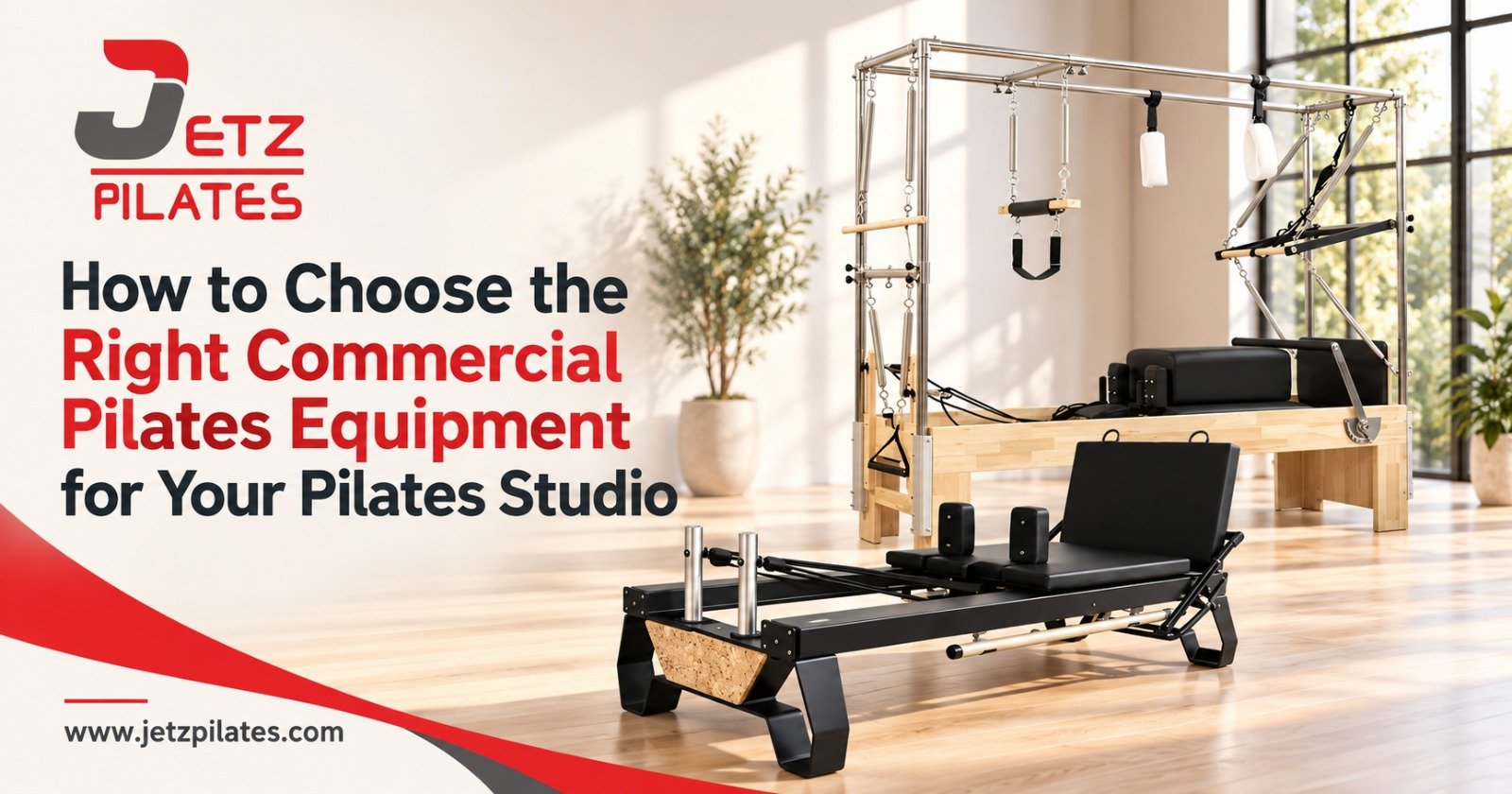
Choosing commercial Pilates equipment is one of the most important decisions when opening or upgrading a studio. The right machines shape your bottom line, client experience, and instructor efficiency for years to come. Commercial equipment is built better, more adjustable, and more durable than home equipment because it is built for dozens of sessions a day, not for occasional personal use. Bad equipment means frequent repairs, safety issues, and unhappy clients, but well-built machines will keep their value and keep classes running smoothly. This guide discusses equipment types, key buying factors, space planning, business applications, and common mistakes so you can make a confident, informed purchase for your studio. You can also browse the full range of Pilates equipment at Jetz Pilates as you read.
1. What Is Commercial Pilates Equipment?
Commercial Pilates equipment is professional-grade equipment designed for studio use and daily use by multiple users, with reinforced frames, adjustable parts, and higher weight limits than home equipment.
Studios require machines that can take dozens of sessions a week, not a handful of workouts a month. Commercial units typically include:
- Thicker steel or aluminum frames
- Versatility for all heights, body types, and skill levels
- Heavy-duty upholstery and trim for high use
- Designs for instructor-led group and private sessions
- Long service life for continuous wear
Instructors and clients use this equipment daily, making durability and stability essential requirements rather than luxury items.
2. Commercial Pilates Equipment vs. Home Pilates Equipment
The difference between commercial and home Pilates equipment is not about being “better” or “worse”; it’s about purpose. Home equipment is designed for the occasional, solitary workout, while commercial equipment is designed for constant rotation between bodies and skill levels.
Key differences include:
- Build quality: commercial frames use thicker materials to resist wear
- Frame strength: designed to handle repeated stress from multiple users
- Usage frequency: rated for many hours of daily operation
- Adjustment options: broader ranges to fit varied client needs
- Stability: reduced wobble during dynamic movements
- Comfort: higher-density padding for repeated use
- Maintenance: commercial units are easier to service and repair
- Lifespan: built to last years under professional conditions, not months
Buying home-use equipment for a commercial setting is a common and costly mistake, since it wears out far faster than expected.
3. Essential Commercial Pilates Equipment for a Studio
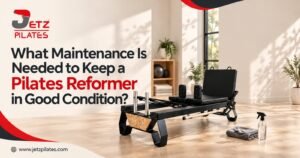
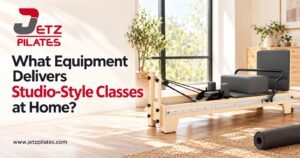
Commercial Pilates Reformer
The majority of studios are built around the commercial Pilates reformer. Suitable for beginners and advanced clients, the sliding carriage, springs, and straps provide resistance training. Studios like reformers because they allow many exercises on one machine, making them ideal for group or one-on-one classes. When comparing options, check for smooth carriage glide, adjustable spring tension, and a sturdy frame. For a lighter frame, see the Luxury Aluminum Reformer bundle.
Pilates Cadillac / Trapeze Table
The Cadillac, or trapeze table, adds a vertical frame with bars, springs, and straps for assisted and resistance-based exercises. It’s especially useful for rehabilitation-style movement and advanced conditioning work. Many studios treat it as a complementary machine to the reformer rather than a replacement. Not sure which to prioritise? Read our Reformer vs Cadillac guide.
Reformer With Tower
A reformer with an attached tower combines two functions in one footprint, which is why it works well in studios with limited floor space. It allows instructors to move between reformer and tower-based exercises without needing a separate Cadillac unit.
Pilates Chair
The Pilates chair is small but challenging, with pedals and springs used to build strength, balance, and controlled movement. Its small footprint makes it a useful addition to even a cramped studio layout.
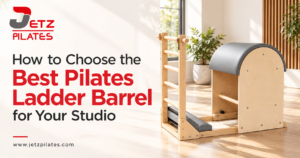
Ladder Barrel
The ladder barrel is for stretching, spinal articulation, and mobility work. It is often used along with reformer and mat work, especially to increase flexibility and posture.
Spine Corrector
The spine corrector is a smaller supporting piece of Pilates studio equipment that helps with spinal alignment, core activation, and controlled stretching exercises. It is generally used with mat work, rather than as a machine on its own.
Together, this equipment forms the foundation for most studio programming and naturally covers a wide range of client goals: strength, mobility, rehabilitation-style movement, and general conditioning.
4. How to Choose Commercial Pilates Equipment
Check the Frame and Build Quality. The frame carries the full load of every exercise, so material and construction matter. Look for reinforced steel or aircraft-grade aluminum frames with welded (not just bolted) joints, since these hold up better under constant, heavy use.
Look at the Carriage. The carriage should glide smoothly and quietly, without sticking or excessive noise. Examine the padding thickness and dimensions too, because a carriage that’s too short or too firm affects client comfort during longer sessions.
Examine the Spring System. Springs determine resistance levels, and studios need a range that works for everyone from first-time clients to professional athletes. More spring options provide more flexibility in advancing a client’s program without requiring additional equipment.
Consider Adjustability. Footbars, headrests, shoulder rests, ropes, and straps should all adjust easily to fit different body types. This is important because studios cater to a diverse clientele, and equipment designed to fit only an “average” body restricts comfortable use for many individuals.
Check User Weight Capacity. Commercial equipment must accommodate a wide range of client weights safely. Always confirm the manufacturer’s stated capacity rather than assuming, since it affects both safety and liability.
Consider Safety. Stability, secure spring attachments, non-slip grips, and clear inspection points all reduce injury risk. Studios should also build routine safety checks into their maintenance schedule, not just rely on the equipment’s initial build quality.
Check Warranty and After-Sales Support. A commercial buyer wants more than a reasonable price; he wants a supplier who stands behind the equipment. Reliable warranty terms, availability of spare parts, and responsive service support are what keep a studio running without long downtimes. Ongoing support is one of the key areas that makes a difference when working with an established Pilates equipment supplier like Jetz Pilates. It has a direct impact on how long your equipment stays in service.
5. How Much Space Does Commercial Pilates Equipment Need?
A single reformer typically needs a floor footprint plus surrounding clearance for the carriage’s full slide range, instructor access, and safe client entry and exit, generally more space than most people expect.
When planning your studio layout, consider:
- Machine dimensions, including carriage travel distance
- Room for reformers to move safely and have privacy
- Room for teachers to circulate and make postural corrections
- Clear paths for clients to enter and exit equipment
- Storage space for props, mats, and small accessories
- Separate reception and changing areas from the workout floor
- Space to grow if you need to add equipment later
A common planning pitfall is underestimating space needs, so plot your total equipment inventory onto the actual floor plan before you make any purchases. If you want expert help, Jetz Pilates offers studio setup consulting across India.
6. How Many Pilates Reformers Does a Studio Need?
There is no single right number of reformers. It depends on your business model and your goals.
Factors that influence the right count include:
- Studio size and total floor space available
- Whether you teach group classes, private classes, or both
- Projected average class size
- Available funds
- Instructor capacity and scheduling
- The ratio of private to group bookings
- Second location or future growth plans
A boutique studio specializing in small group classes could require six to eight reformers, while a bigger fitness-center-style studio could require significantly more. Begin with realistic booking projections based on data rather than estimates. Once you have a number, compare reformer options that fit your budget and floor plan.
7. What Should You Look for in a Commercial Pilates Reformer?
When comparing a studio Pilates reformer, check for:
- Sturdy, reinforced frame
- Gliding, noiseless carriage motion
- Resistance adjustable with several levels of spring
- Soft, durable cushioning
- Footrest with height adjustment
- Good ropes and straps that don’t fray
- Stable, safe shoulder rests
- Easy access to maintain
- Availability of spare parts
- A true commercial warranty and support plan
This checklist works well as a side-by-side comparison tool when evaluating multiple suppliers.
8. Commercial Pilates Equipment for Different Businesses
Pilates Studios. Dedicated studios need equipment that is built to withstand heavy day-to-day use and group class formats, with enough reformers and supporting apparatus to handle back-to-back sessions.
Gyms and Fitness Centers. Gyms tend to cater to a wider range of fitness levels and goals, so the equipment needs to be versatile enough for both structured classes and more casual member use.
Physiotherapy and Rehabilitation Centers. In clinical practice, professional Pilates equipment allows for controlled movement under supervision as part of a wider program. Equipment supports movement-based rehabilitation work under professional guidance, rather than treating any specific condition on its own, so it’s best to keep expectations conservative here.
Hotels and Wellness Centers. Hospitality and wellness venues often focus on the premium guest experience, so they choose equipment according to available space, versatility, and visual appeal.
Personal Training Studios. A tower reformer is a perfect piece of multi-purpose, space-saving equipment for smaller personal training studios, as it offers variety without using up a lot of space.
9. Common Mistakes When Buying Commercial Pilates Equipment
- Making purchases based solely on price, and overlooking build quality
- Ignoring the actual available floor space before placing an order
- Choosing equipment without checking adjustability
- Ignoring the availability of replacement parts
- Overlooking maintenance needs
- Skipping the fine print of warranty terms
- Purchasing home-use equipment for heavy commercial demand
- Over-ordering equipment before confirming client demand
To avoid these mistakes, conduct thorough research and work with a supplier who specializes in commercial Pilates machines, rather than making a hasty decision based solely on initial costs.
10. How to Maintain Commercial Pilates Equipment
Regular maintenance prolongs working life and ensures equipment remains safe. Good practice is to:
- Clean upholstery and touch points regularly between sessions
- Inspect springs, ropes, and straps for worn or frayed areas
- Keep moving parts, wheels, and carriage tracks running smoothly
- Follow the maintenance schedules recommended by the manufacturer
- Time professional servicing for when components show signs of wear
Consistent maintenance is far cheaper than emergency repairs or early replacement, and it protects both client safety and your equipment investment.
11. Is Commercial Pilates Equipment Worth the Investment?
For most studios, yes, but the value depends on how the equipment is used and maintained over time. A well-built reformer or Cadillac machine can serve a studio for many years, supporting steady class capacity and a consistent client experience. Because commercial equipment is versatile, it also supports a wider range of programming than basic home-use alternatives.
That said, the investment is only worth it with proper maintenance, smart purchasing decisions, and equipment that fits your actual studio size and clientele. The total cost of ownership should be calculated in terms of lifespan, support, and versatility, rather than just the lowest price.
FAQ
1. What equipment do I need for a commercial Pilates studio?
Most studios start with a commercial Pilates reformer, a Cadillac or trapeze table, a Pilates chair, and supporting pieces such as a ladder barrel and spine corrector, then expand based on class formats and client demand.
2. What is the difference between commercial and home Pilates equipment?
Commercial equipment uses stronger frames, more adjustability, and higher-capacity components built for daily multi-user use, while home equipment is designed for lighter, occasional single-user workouts.
3. How do I choose a commercial Pilates reformer?
Focus on frame strength, carriage smoothness, spring resistance range, adjustability, weight capacity, safety features, and the supplier’s warranty and after-sales support. You can also read our Reformer vs Cadillac comparison to decide which machine to buy first.
4. How much space do I need for commercial Pilates equipment?
You’ll need space for the machine’s footprint, carriage travel, instructor movement, safe client access, and any storage or reception area, which typically exceeds initial estimates.
5. What should I check before buying commercial Pilates equipment?
Check build quality, adjustability, weight capacity, safety features, spare parts availability, and warranty terms before comparing prices between suppliers.
Choosing the Right Commercial Pilates Equipment for Your Studio
The first step is choosing the right equipment, which is based on a few core factors: build quality, durability, adjustability, safety, space planning, ongoing maintenance, and the type of clients your studio will be serving. Getting these right from the start saves you money on repairs and replacements later and directly affects how your clients experience your studio day to day. If you are ready to explore options with a team that understands studio needs from setup through to after-sales support, Jetz Pilates is a good place to start your search.