Have you ever wondered if your favorite studio gear could last a lifetime with just a few simple habits? Many users overlook the small details that keep their workout tools running smoothly.
Consistent Pilates equipment maintenance is the secret to ensuring both safety and peak performance during every session. By adopting a proactive care routine, you can significantly extend the functional life of your studio or home gear.
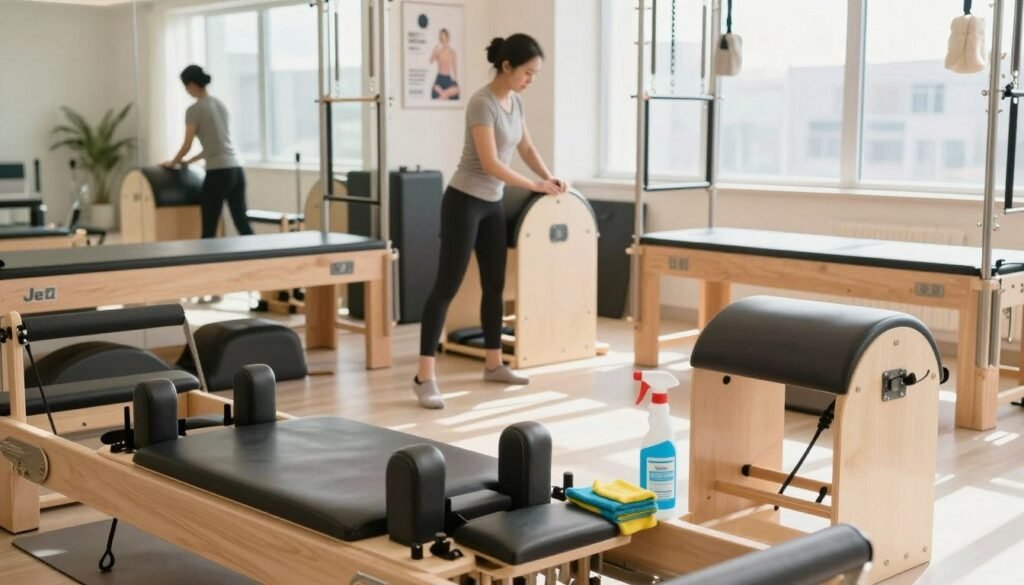
Taking these steps helps you protect your investment while maintaining a high-quality environment for years to come. Proper attention today prevents costly repairs tomorrow and keeps your focus exactly where it belongs: on your movement.
Key Takeaways
- Regular inspections prevent unexpected mechanical failures.
- Cleaning surfaces after every use preserves upholstery integrity.
- Tightening hardware ensures a stable and safe workout experience.
- Proactive care significantly increases the resale value of your items.
- Small daily habits reduce the need for professional servicing.
Understanding Pilates Equipment Maintenance and Longevity
Your Pilates apparatus is more than just gym equipment; it is a long-term asset for your health. Viewing your gear as a longevity investment ensures that you prioritize its condition from day one. Consistent Pilates equipment maintenance is the most effective way to keep your studio safe and functional.
Why Regular Care Protects Your Investment
Neglecting your machines often leads to premature wear that is difficult and expensive to fix. By performing routine checks, you catch minor issues before they turn into major safety hazards. This proactive approach saves you money and keeps your clients feeling secure during their workouts.
Applying simple durability tips can significantly extend the life of your high-value components. When you clean and inspect your equipment regularly, you prevent the buildup of dust and debris that can damage moving parts. Protecting your gear is essentially protecting your business bottom line.
Setting Realistic Lifespan Expectations for Reformers and Chairs
Every piece of equipment has a natural lifecycle that depends heavily on how often it is used. A reformer in a busy commercial studio will naturally experience more wear than one used in a private home setting. Understanding these differences helps you plan for future upgrades or necessary part replacements.
High-quality reformers and chairs are built to last for many years with proper care. However, you should expect to replace smaller items like springs, ropes, and upholstery more frequently than the main frame. Keeping a maintenance log is a great way to track these parts and ensure your longevity investment continues to perform at its best.
Daily and Weekly Cleaning Procedures
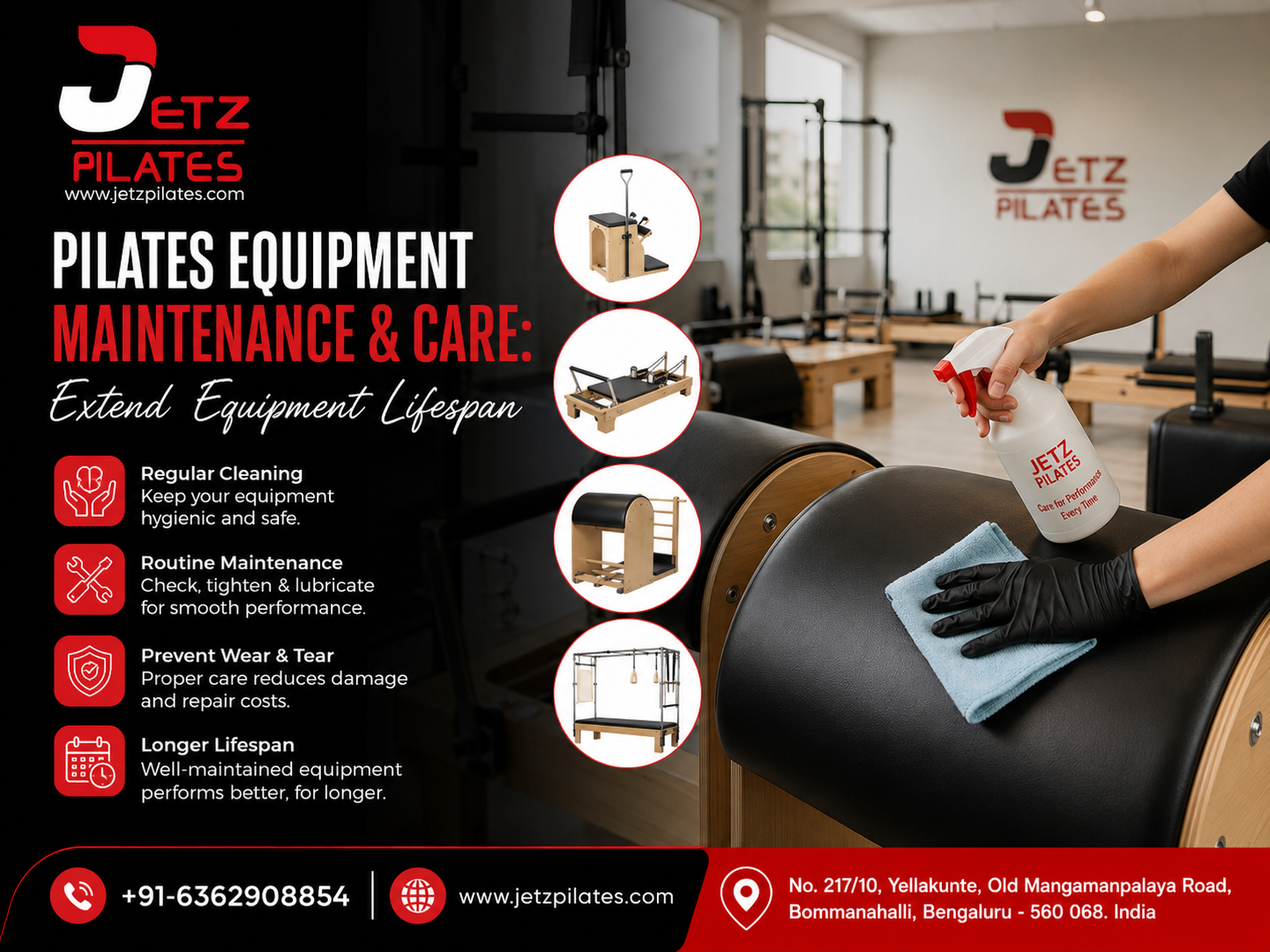
Establishing a reliable cleaning schedule ensures your equipment remains safe and functional for years. By integrating these habits into your routine, you protect your investment and provide a clean environment for every workout. Consistent Pilates equipment maintenance is the most effective way to prevent premature wear and tear.
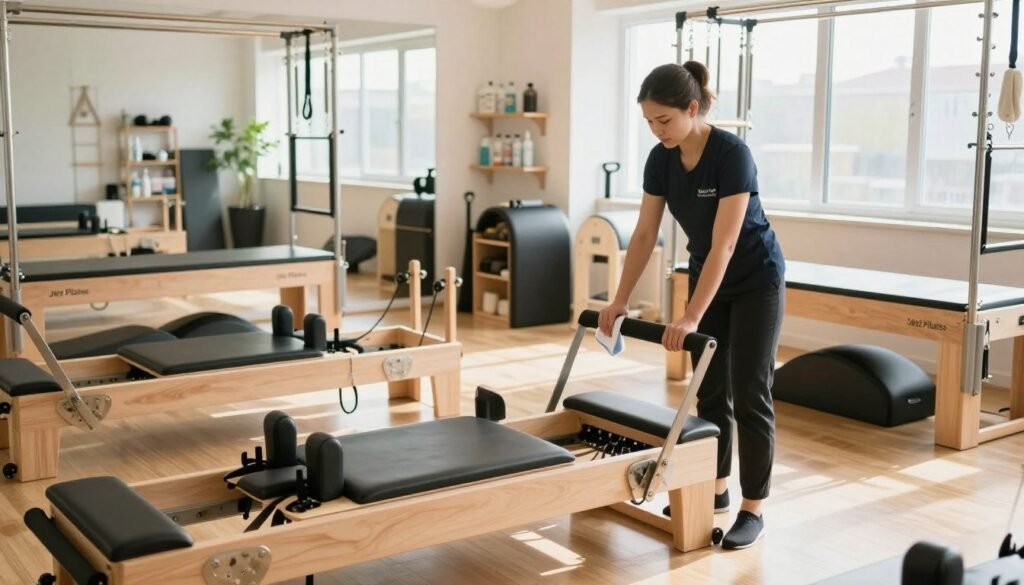
Safe Cleaning Agents for Vinyl and Upholstery
When cleaning your vinyl upholstery, avoid harsh chemicals like bleach or ammonia. These substances can cause the material to crack or discolor over time. Instead, use a gentle solution of mild dish soap and water applied with a soft microfiber cloth.
Always wipe the surface dry immediately after cleaning to prevent moisture from seeping into the seams. This simple step preserves the integrity of the vinyl and keeps your equipment looking brand new.
Wiping Down Rails and Carriage Wheels
The rails and carriage wheels are the heart of your reformer’s smooth movement. Dust and debris can accumulate here, leading to friction and noise. Use a dry, lint-free cloth to wipe down the rails after every session to maintain optimal performance.
For a deeper clean, check the wheels for any hair or lint buildup. Keeping these components clean is a vital part of your maintenance schedules to ensure a silent and fluid glide during your exercises.
Sanitizing Hand Straps and Loops
Hand straps and loops absorb sweat and oils during intense workouts, making them a hotspot for bacteria. You should sanitize these items weekly using a mild, fabric-safe disinfectant spray. Allow them to air dry completely before your next use to prevent odors and material degradation.
| Task | Frequency | Recommended Tool |
| Wipe Rails | Daily | Microfiber Cloth |
| Clean Vinyl | Daily | Mild Soap Solution |
| Sanitize Straps | Weekly | Fabric Disinfectant |
| Inspect Wheels | Weekly | Soft Brush |
Preventive Care for Springs and Moving Parts
Preventive maintenance is the secret to a smooth, quiet, and safe Pilates practice. By dedicating a few minutes each month to your gear, you ensure that every movement remains fluid and secure. Consistent Pilates equipment maintenance is the most effective way to avoid unexpected mechanical failures during a session.
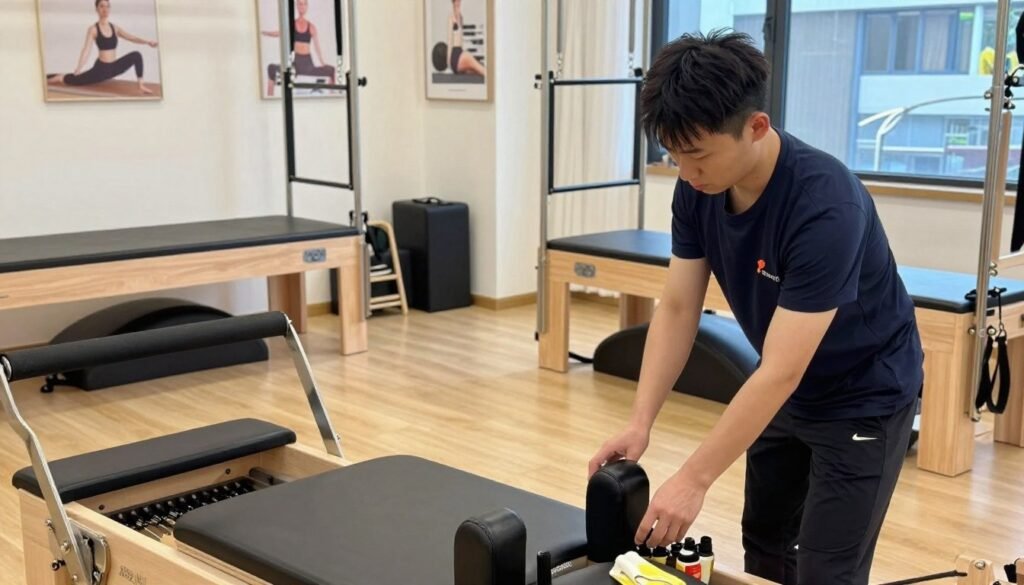
Inspecting Springs for Signs of Wear
Your springs are the heart of your reformer, and they require a sharp eye to stay safe. You should regularly check for signs of oxidation, kinks, or gaps between the coils. If a spring shows any permanent deformation, it is time to replace it immediately to maintain consistent resistance.
“An ounce of prevention is worth a pound of cure when it comes to the mechanical integrity of your fitness equipment.”
Lubricating Guide Rods and Pulley Systems
A noisy reformer is often a sign that your guide rods or pulleys need a little attention. Applying a high-quality, silicone-based lubricant helps these parts glide silently and efficiently. These simple durability tips prevent friction-based wear and keep your equipment running like new.
- Clean the guide rods with a soft, dry cloth before applying lubricant.
- Use only manufacturer-recommended sprays to avoid damaging the finish.
- Wipe away any excess oil to prevent dust buildup on the tracks.
Checking Bolts and Fasteners for Tightness
Vibration during intense workouts can cause bolts and fasteners to loosen over time. You should perform a monthly walk-around to ensure every connection point remains firm. Keeping these components tight is a fundamental aspect of Pilates equipment maintenance that prevents wobbling and structural instability.
Identifying Stress Fractures in Metal Components
While metal is strong, it is not immune to fatigue. Look closely at joints and brackets for hairline cracks, which are early indicators of potential failure. Following these durability tips allows you to catch issues early, ensuring your studio remains a safe environment for every client.
Seasonal Maintenance and Deep Cleaning Routines
When the seasons shift, your Pilates apparatus needs a little extra attention to maintain its peak performance. While daily habits are essential, seasonal Pilates equipment maintenance allows you to address the deep-seated dust and debris that accumulate in hard-to-reach areas. Following these thorough routines will help you protect your investment and ensure a safe environment for every user.
Deep Cleaning the Reformer Frame
Over time, dust and sweat can settle into the crevices of your reformer frame. Use a soft, damp cloth with a mild, non-abrasive soap to wipe down the entire structure. Pay close attention to the corners and joints where particles often hide.
Avoid using harsh chemicals that might strip the finish or damage the metal components. A gentle touch is often the best way to preserve the integrity of your machine. Once cleaned, ensure the frame is completely dry to prevent any moisture-related issues.
Inspecting Under the Carriage
The area beneath the carriage is frequently overlooked, yet it is vital for long-term durability tips. Carefully lift or slide the carriage to inspect the tracks and the underside for any hidden debris or loose hardware. Removing hair and dust buildup here prevents unnecessary friction during your workouts.
Check that all wheels are spinning freely and are free from cracks or flat spots. If you notice any unusual resistance, it may be time to clean the tracks more thoroughly. Keeping this area clear is a simple way to ensure a smooth, quiet glide.
Refreshing Wood Finishes on Classic Equipment
Classic wood reformers add a touch of elegance to any studio, but they require specific care to stay looking professional. Use a high-quality, wood-safe polish to nourish the grain and protect the surface from drying out. This simple step keeps your equipment looking brand new for years.
Always apply the polish with a soft microfiber cloth to avoid scratching the finish. Regular application helps maintain the wood’s natural luster and prevents minor scuffs from becoming permanent marks. Your commitment to these maintenance schedules will pay off in both aesthetics and equipment longevity.
| Task Category | Frequency | Action Required |
| Frame Cleaning | Quarterly | Wipe with mild soap |
| Under-Carriage | Monthly | Clear debris and dust |
| Wood Treatment | Bi-Annually | Apply wood-safe polish |
| Hardware Check | Quarterly | Tighten all fasteners |
Troubleshooting Common Equipment Issues
When your workout flow is interrupted by strange noises, it is time to troubleshoot your equipment. Consistent Pilates equipment maintenance helps prevent most mechanical failures, but even the best gear can develop minor quirks over time. Addressing these small issues early ensures your studio remains a safe and productive space.
Resolving Squeaky Springs and Noisy Carriages
A squeaky spring is often the first sign that your equipment needs a little extra attention. Usually, this sound indicates that the metal coils are rubbing against each other or the attachment points are dry. You can often resolve this by carefully cleaning the spring hooks and applying a light, silicone-based lubricant to the connection points.
If the noise persists, check the carriage wheels for debris. Dust and hair can easily get trapped in the tracks, causing a grinding sound during movement. A quick wipe-down of the rails and wheels is a fundamental part of effective Pilates equipment maintenance that keeps your carriage gliding silently.
Fixing Uneven Carriage Tracking
If your carriage feels wobbly or pulls to one side, the tracking is likely misaligned. First, ensure that your reformer is sitting on a perfectly level floor. Even a slight tilt in the room can cause the carriage to drift during your exercises.
Next, inspect the wheels for uneven wear or loose bolts. If one wheel is tighter than the others, it will create resistance and disrupt your balance. Adjusting the tension on the wheel axles often restores smooth, centered movement to your Pilates equipment maintenance routine.
Addressing Frayed Ropes and Worn Webbing
Safety is the most important aspect of your gear. You should inspect your ropes and webbing for signs of fraying or thinning at least once a month. If you notice any loose threads or significant wear, replace the components immediately to prevent snapping during a session.
Do not attempt to repair frayed ropes with tape or knots, as these methods compromise the structural integrity of the material. Always source authentic replacement parts from the manufacturer to ensure compatibility and safety. Proper Pilates equipment maintenance means knowing when a part has reached the end of its life cycle.
| Issue | Common Cause | Recommended Action |
| Squeaky Springs | Friction or debris | Clean and lubricate hooks |
| Noisy Carriage | Dirty rails or wheels | Wipe down tracks thoroughly |
| Uneven Tracking | Loose axle or uneven floor | Level unit and tighten bolts |
| Frayed Ropes | Natural wear and tear | Replace with new parts |
Navigating Repairs and Manufacturer Warranties
Knowing when to fix your gear yourself and when to call a pro is essential for your longevity investment. Proper care involves more than just daily cleaning; it requires a strategic approach to mechanical issues. By understanding your rights and responsibilities, you can keep your studio running smoothly without unnecessary stress.
When to Perform DIY Repairs vs Professional Service
Simple tasks like tightening a loose bolt or wiping down rails are perfect for DIY maintenance. However, complex mechanical failures often require a certified technician to ensure safety and performance. If you feel unsure about a repair, it is always safer to consult the manufacturer.
- DIY: Replacing ropes, cleaning upholstery, and tightening visible fasteners.
- Professional: Adjusting internal spring tension, frame structural repairs, or complex pulley alignment.
Understanding Your Equipment Warranty Coverage
Your warranty is a valuable tool for protecting your Pilates equipment maintenance budget. Most manufacturers provide specific guidelines on what is covered, such as frame defects or spring fatigue. Always register your equipment immediately after purchase to ensure you have full access to these benefits.
Be careful, as unauthorized repairs or the use of non-standard parts can often void your warranty. Before attempting any major fix, review your documentation or contact the support team. This simple step can save you significant costs if a part fails prematurely.
Sourcing Authentic Replacement Parts
Using genuine parts is vital for maintaining the integrity of your equipment. While third-party alternatives might seem cheaper, they often lack the precision engineering required for smooth operation. Authentic components are designed to work seamlessly with your specific model, ensuring a consistent feel during every workout.
Investing in original parts also helps maintain the resale value of your gear. When you prioritize quality, you protect your long-term investment and ensure that your clients enjoy a safe, reliable experience. Always order replacements directly from the manufacturer or an authorized dealer to guarantee authenticity.
Conclusion
Your commitment to movement deserves equipment that performs at its peak every single day. Consistent Pilates equipment maintenance serves as the foundation for a safe and effective studio environment.
Adopting structured maintenance schedules allows you to catch minor issues before they become costly repairs. This proactive approach transforms your gear into a true longevity investment that supports your professional goals.
Brands like Balanced Body and Peak Pilates design their machines to last, but they rely on your diligence to function correctly. By tracking your care routines, you demonstrate a high standard of quality to every client who walks through your door.
Start your log today to keep your springs, rails, and upholstery in top condition. A well-cared-for studio reflects your passion for the craft and ensures that your equipment remains a reliable partner in your fitness journey.
FAQ
How long can I realistically expect my Pilates reformer to last?
When you treat your apparatus as a serious longevity investment, high-quality equipment from brands like Balanced Body or Gratz can easily last 20 years or more. The total lifespan depends heavily on your maintenance schedules and volume of use, but with proper care, the core frame remains functional for decades while smaller components are replaced as needed.
What are the best durability tips for preserving vinyl upholstery?
To keep your upholstery from cracking or peeling, never use harsh alcohol-based cleaners or bleach. Instead, use a gentle solution of mild dish soap and water or specialized cleaners like Merrithew’s upholstery wipes. One of the best durability tips is to wipe down the equipment after every single session to remove body oils and sweat, which can degrade the material over time.
How often should I replace the springs on my Pilates equipment?
Safety is the priority here. Most industry leaders, including Peak Pilates, recommend replacing your springs every two years of regular use. However, you should perform preventive care checks weekly if you see any gaps in the coils, rusting, or “waves” in the spring, replace them immediately to avoid breakage during a workout.
Why is it important to follow strict maintenance schedules for carriage wheels and rails?
Dust, hair, and grit act like sandpaper against your equipment’s rails. By sticking to regular maintenance schedules that include wiping the rails daily and cleaning the wheels weekly, you prevent friction that can score the metal and ruin the smooth “Pilates glide.” Keeping these parts clean ensures the machine runs silently and efficiently.
Can I perform my own repairs, or will it void my manufacturer warranty?
Simple tasks like replacing ropes, loops, or springs are generally expected of owners and won’t void your warranty. However, for structural issues or internal pulley mechanisms, it is best to consult the manufacturer. Using authentic replacement parts from brands like Balanced Body ensures you are protecting your longevity investment and maintaining the safety standards of the original design.
What should I look for during a seasonal deep-cleaning routine?
Every few months, you should go beyond the surface. This involves inspecting under the carriage for hidden debris, checking all bolts and fasteners for tightness, and looking for stress fractures in metal components. If you have wood-framed equipment, applying a specialized wood polish can prevent the frame from drying out and keep it looking professional for years to come.